Friday, 5 June 2020

Josephine Baker

Josephine Baker (born Freda Josephine McDonald, naturalised French Joséphine Baker; 3 June 1906 – 12 April 1975) was an American-born French singer, dancer, actress, French Resistance agent, and civil rights activist. Her career was centered primarily in Europe, mostly in her adopted France. Baker was the first African-American to star in a major motion picture, the 1927 silent film Siren of the Tropics, directed by Mario Nalpas and Henri Étiévant.


Baker's consistent badgering of a show manager in her hometown led to her being recruited for the St. Louis Chorus vaudeville show. At the age of 15, she headed to New York City during the Harlem Renaissance, performing at the Plantation Club, Florence Mills’ old stomping ground, and in the chorus lines of the groundbreaking and hugely successful Broadway revues Shuffle Along (1921) with Adelaide Hall and The Chocolate Dandies (1924). Baker performed as the last dancer on the end of the chorus line, where her act was to perform in a comic manner, as if she were unable to remember the dance, until the encore, at which point she would perform it not only correctly but with additional complexity. A term of the time describes this part of the cast as "The Pony". Baker was billed at the time as "the highest-paid chorus girl in vaudeville".


Baker sailed to Paris for a new venture, and opened in La Revue Nègre on 2 October 1925, aged 19, at the Théâtre des Champs-Élysées. She became an instant success for her erotic dancing, and for appearing practically nude onstage. After a successful tour of Europe, she broke her contract and returned to France in 1926 to star at the Folies Bergère, setting the standard for her future acts. Baker performed the "Danse Sauvage" wearing a costume consisting of a skirt made of a string of artificial bananas. Her success coincided (1925) with the Exposition des Arts Décoratifs, which gave birth to the term "Art Deco", and also with a renewal of interest in non-Western forms of art, including African. Baker represented one aspect of this fashion. In later shows in Paris, she was often accompanied on stage by her pet cheetah, "Chiquita", who was adorned with a diamond collar. The cheetah frequently escaped into the orchestra pit, where it terrorized the musicians, adding another element of excitement to the show.


At this time she scored her most successful song, "J'ai deux amours" (1931). In 1934, she took the lead in a revival of Jacques Offenbach's opera La créole, which premiered in December of that year for a six-month run at the Théâtre Marigny on the Champs-Élysées of Paris. In preparation for her performances, she went through months of training with a vocal coach. In the words of Shirley Bassey, who has cited Baker as her primary influence, "... she went from a 'petite danseuse sauvage' with a decent voice to 'la grande diva magnifique' ... I swear in all my life I have never seen, and probably never shall see again, such a spectacular singer and performer." Despite her popularity in France, Baker never attained the equivalent reputation in America. Her star turn in a 1936 revival of Ziegfeld Follies on Broadway generated less than impressive box office numbers, and later in the run, she was replaced by Gypsy Rose Lee.


She was known for aiding the French Resistance during World War II. After the war, she was awarded the Croix de guerre by the French military, and was named a Chevalier of the Légion d'honneur by General Charles de Gaulle. Baker refused to perform for segregated audiences in the United States and is noted for her contributions to the Civil Rights Movement.


Baker was on stage at the Olympia in Paris in 1968, in Belgrade and at Carnegie Hall in 1973, and at the Royal Variety Performance at the London Palladium and at the Gala du Cirque in Paris in 1974. On 8 April 1975, Baker starred in a retrospective revue at the Bobino in Paris, Joséphine à Bobino 1975, celebrating her 50 years in show business. Four days later, Baker was found lying peacefully in her bed surrounded by newspapers with glowing reviews of her performance. She was in a coma after suffering a cerebral hemorrhage. She was taken to Pitié-Salpêtrière Hospital, where she died, aged 68, on 12 April 1975.

Wednesday, 3 June 2020

Willa Mae Buckner

Willa Mae Buckner was born on June 15th, 1922 in Augusta, Georgia. In her days as a touring performer, Buckner was known as “The Wild Enchantress,” “Princess Ejo,” “The Snake Lady,” and “The World’s Only Black Gypsy.” Buckner was a fearless woman who taught herself piano at age 21 and picked up the guitar at 35. She was known for many different lives: she knew seven languages, traveled with her own circus/snake show, was a guitar slinging burlesque dancer, and “settled down” by owning 28 snakes at the end of her life.


As to what Willa Mae Buckner meant to American music in the twentieth century, it’s hard to say. Her libidinous signature songs, “Peter Rumpkin” is not particularly well-known, and her music is available only on two compilations distributed by the nonprofit Music Maker Relief Foundation of Pinnacle, North Carolina. Buckner was a genuine trailblazer, though, an attraction on the ill-documented carnival and medicine show circuit. Like long-dead medicine show vets Pink Anderson and Peg Leg Sam, Willa borrowed liberally from vaudeville, knowing full well that the strange, sexy or hilarious was more likely to draw paying customers than the heartfelt and forlorn.


She was from the pre-television, segregation era, and Willa was a star. People think the blues is just Muddy Waters. In Southern, working-class African-American communities, though, they might not even know who Muddy Waters was, but they know Willa because she came to play the tent show every year. Three generations of people came out to see her snake shows. Buckner worked all sorts of carnival shows in the early years of her career. “I worked the nail bed,” she told Welker. “I ate fire. I also did the bronze dance: That’s where you go all over the body with mineral oil and you put that gold paint on. You did contortions when you were in that stuff, and if you weren’t careful you’d fall flat on your rear or your belly.” In 1946, Willa decided to get off the road and settle in Spanish Harlem. She sewed, worked at restaurants and in other people’s homes, and studied foreign languages at night school. She also took lessons in tap and gypsy-style belly dancing and played with a Calypso band in small clubs.


She was 42 when she began making plans to get back on the road. The 1964 World’s Fair was held at Flushing Meadow in the New York City borough of Queens, and among the featured performers was a Moroccan snake handler. After building a healthy collection of 28 snakes, she went to Philadelphia, bought a truck and a tent, and joined up with a traveling sideshow. She began billing herself as Princess Ejo, The Wild Enchantress or The World’s Only Black Gypsy, and her snake shows were popular facets of various carnivals. In 1973, Willa’s truck broke down and she left sideshow life to settle near her family in Winston-Salem.


In January 1994, the Music Maker Foundation was formed and it began spreading the word about Willa and other “forgotten heroes of the blues,” That same year she went back to New York, this time to play Carnegie Hall as part of a show called Circus Blues. By the summer of 1999, Willa’s mind and body began to shut down. She made it through the holidays, dying early in the morning on Jan. 8.

Monday, 1 June 2020

Nona Hendryx

Nona Hendryx (born October 9, 1944), is an American vocalist, record producer, songwriter, musician, author, and actress. Hendryx is known for her work as a solo artist as well as for being one-third of the trio Labelle, who had a hit with "Lady Marmalade." Her music has ranged from soul, funk, and R&B to hard rock, new wave, and new-age.


Hendryx was born in Trenton, New Jersey in 1944 where she met fellow New Jersey native Sarah Dash and later met Philadelphia-born singer Patricia Holte (Patti LaBelle). After a short-lived tenure as a member of the Del-Capris, Hendryx and Dash formed a singing group with Holte (once the lead singer of a girl group in Philadelphia called The Ordettes). In 1961, Cindy Birdsong, from Camden, New Jersey, became the fourth member of the group, who became the Bluebelles and signed their first deal with Newtown Records. After the release of their debut hit, 1962's "I Sold My Heart to the Junkman", their name altered again to Patti LaBelle and the Bluebelles. Hendryx's husky alto differed from Dash's sharp soprano, LaBelle's mezzo-soprano and Birdsong's second soprano. During this tenure, the group became known for their emotional live performances and their renditions of classic standards such as "You'll Never Walk Alone", "Over The Rainbow", and "Danny Boy". The group often found themselves competing against girl groups such as The Chantels, Shirelles, and The Supremes. In 1967, Hendryx, LaBelle, and Dash were shocked to discover that Birdsong had secretly joined the Supremes after Florence Ballard was ousted from the group by Motown. Different members of the group were in touch with Birdsong over the years. Birdsong's relationships with the Bluebelles healed and they came together again for the ceremony when the group won an R&B Foundation Lifetime Achievement Award in 1999.


For the next three years, the group struggled to compete against the changing musical landscape for which their girl group sound had fallen out of favor with popular audiences. In 1971, they moved to England, where they had a cult fan base, and on the advice of Vicki Wickham, changed their name to Labelle and ditched the dresses and bouffant wigs for jeans and Afros. Releasing transitional albums including 1971's Labelle and 1972's Moon Shadow, the group recorded material that included sexual and political subject matter – unheard of for an all-female black group. The transition was hard for lead singer LaBelle, who was a fan of the group's early-era ballads, but she eventually gave in. Member Dash remained neutral throughout the tenure of the group. Shortly after releasing Labelle, the group became the opening act for The Who, whose producer Kit Lambert had produced the group's Warner debut. They also opened for Laura Nyro during that same time and sang backup on her album Gonna Take a Miracle. After the release of Moon Shadow, Hendryx became the chief songwriter for most of the group's records while LaBelle and Dash occasionally wrote their own material. After successfully opening for The Rolling Stones during the group's American tour in 1973, the group released Pressure Cookin', where they once again adopted a new look as "glam rock, space-age divas". As a songwriter, Hendryx subsequently wrote powerful ballads ("You Turn Me On" and "Nightbird" from Nightbirds, "Going Down Makes Me Shiver" from Labelle's final album, Chameleon), and a wealth of more uptempo numbers ("Space Children," "Messin' with My Mind," "Gypsy Moths," and "Who's Watching the Watcher"). Her themes were unconventional, diverse, and often experimental. Her composition "A Man in a Trenchcoat (Voodoo)" from Chameleon also marked Hendryx's first time singing lead vocal on an album. In 1974, the group hit gold with the release of Nightbirds following the release of the smash hit "Lady Marmalade". In her memoir Don't Block the Blessings, Labelle frontwoman Patti LaBelle attributed the band's 1976 breakup to musical and personal tensions within the group. Labelle, Dash, and Hendryx all embarked on solo careers; Wickham stayed on with Hendryx to manage her solo career. 


In 1977, Hendryx released her first solo album, a self-titled collection. A blend of soul and hard rock, it contained notable tracks such as "Winning" (later recorded by Santana) and the ballad "Leaving Here Today". It quickly disappeared from the shelves, and Hendryx was dropped from Epic. Subsequently, she recorded four singles for Arista (London), which also did not achieve chart success. She did find success doing session work during this period, most notably providing background vocals for Talking Heads and touring with them, appearing first at the major Heatwave festival in August 1980. In the early 1980s, Hendryx fronted her own progressive art rock group, Zero Cool, which included guitarist Naux (China Shop, Richard Hell), bassist Michael Allison (Darshan Ambient), guitarist Kevin Fullen and drummer Jimmy Allington. Simultaneously, she sang with experimental funk group Material, achieving a giant club hit with "Busting Out." She had two other major club hits soon after: a dance remake of The Supremes' "Love Is Like an Itching in My Heart," and, in a lead vocal guest spot for the Cage, "Do What You Wanna Do." Material also produced her second album Nona in 1983. The hip, contemporary dance sound of this album proved to be more charts-compatible, with the disco music times, and the single "Keep It Confidential" becoming a modest R&B hit written by Ellie Greenwich, Jeff Kent, Ellen Foley, and a remix of "B-boys" finding major success on the dance charts. "Transformation" became a Hendryx staple, and later was covered by Fierce Ruling Diva. Another particularly noteworthy track on the album is the ballad "Design for Living," which featured guests Laurie Anderson, Gina Shock of The Go-Go's, Valerie Simpson of Ashford & Simpson, Tina Weymouth of Tom Tom Club and Talking Heads, Nancy Wilson of Heart, and former bandmate Patti LaBelle.


In 1985, Hendryx wrote and recorded "Rock This House" with Keith Richards from her album The Heat. The song was nominated for a Grammy Award. The same year, the MTV broadcast of the video "I Need Love" stirred some controversy for featuring drag queens. As a result, it quickly was removed from MTV's playlist. She lso took part in the Artists United Against Apartheid project with the song Sun City, one of the greatest and strongest protest songs against South Africa's Apartheid during those days.


Her biggest commercial success came with 1987's single "Why Should I Cry?", a top 5 R&B hit which also reached #58 on the Billboard 100. The accompanying album, Female Trouble, boasted an impressive list of contributors, including Peter Gabriel, Prince ("Baby Go Go"), George Clinton, David Van Tieghem and Mavis Staples. Around this time, she became a member of the Black Rock Coalition, founded by Vernon Reid of Living Colour. Hendryx took a detour from commercial music with Skin Diver, a new age record produced with long-time Tangerine Dream member Peter Baumann. The album generally was greeted with positive feedback from critics, but was commercially unsuccessful. The title track did attract some attention, as did "Women Who Fly", which later was covered by Jefferson Starship.


She has been involved in many musical collaborations, both for her vocals and her songwriting. One of her early collaborations was with Jerry Harrison's (Talking Heads) The Red and The Black album in 1981. In 1992, she recorded a duet with Billy Crawford, "Urgently in Love,". In 1998, she performed in the video of the rap hit "It's a Party" with Bounty Killer. She has written songs for Dusty Springfield and Ultra Nate. She has produced albums for Lisa Lisa and The Bush Tetras. Other artists with whom she has recorded with over the years include David Johansen, Yoko Ono, Cameo, Talking Heads (3 albums), Garland Jeffreys, Dan Hartman, Afrika Bambaata (performing a duet of "Giving Him Something He Can Feel" with Boy George), Rough Trade, Curtis Hairston, and Graham Parker on "Soul Christmas."

Friday, 29 May 2020

Coccinelle

Jacqueline Charlotte Dufresnoy (23 August 1931 - 9 October 2006), better known by her stage name Coccinelle, was a French actress, entertainer and singer. She was transgender, and was the first widely publicized post-war gender reassignment case in Europe, where she was an international celebrity and a renowned club singer.


Born in Paris at rue Notre Dame de Nazareth Nr. 66 in the 3rd arrondissement of Paris, she took the stage name Coccinelle (French for "ladybug") when she entered show business, making her debut as a showgirl in 1953 at Chez Madame Arthur where her mother was a flower seller. She later performed regularly at the famous nightclub Le Carrousel de Paris, which also featured regular acts by other famous trans women such as April Ashley and Marie-Pier Ysser. 


She sang the title track of Premier rendez-vous, a 1941 film directed by Henri Decoin. She became a media sensation, and performed the Cherchez la femme revue which ran for 7 months at the Olympia in Paris between 1963 and 1964. In 1987 her autobiography was published, titled Coccinelle par Coccinelle.  


In 1959 she appeared in Europa di notte by director Alessandro Blasetti. That same year, Italian singer Ghigo Agosti dedicated the song Coccinella to her, provoking widespread consternation and controversy. Coccinelle appeared in the 1962 film Los Viciosos and was the first French trans woman to become a major star, when Bruno Coquatrix splashed her name in red letters on the front of Paris Olympia for her 1963 revue, Cherchez la femme. She later appeared in the 1968 film Días de viejo color.  


Coccinelle worked extensively as an activist on behalf of transgender people, founding the organization "Devenir Femme" (To Become Woman), which was designed to provide emotional and practical support for those seeking gender reassignment surgery. She also helped establish the Center for Aid, Research, and Information for Transsexuality and Gender Identity. In addition, her first marriage was the first union to be officially acknowledged by the government of France, establishing transgender persons' legal right to marry. Her 1987 autobiography Coccinelle was published by Daniel Filipacchi. Coccinelle was hospitalized in July 2006 following a stroke and died on 6 October at Marseille.

Tuesday, 26 May 2020

Moe Tucker

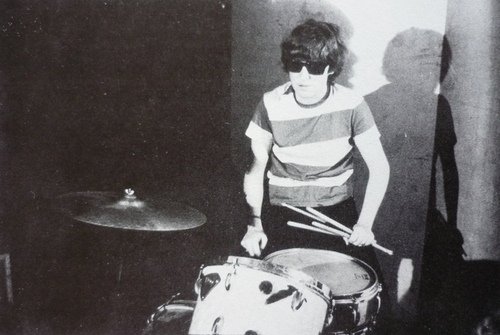
Maureen Ann "Moe" Tucker (born August 26, 1944) is an American musician and singer best known for having been the drummer for the New York City-based rock band the Velvet Underground. As a teenager Tucker was an avid fan of Babatunde Olatunji, whose music she first heard on Murray the K's radio show. Olatunji, along with Bo Diddley and the Rolling Stones, inspired her to become a musician. She began playing the drums in 1963, at age 19. Without any formal instruction, she learned by playing along with popular songs on a second-hand drum kit.


When she was asked to join the Velvet Underground, Tucker had dropped out of Ithaca College and was working for IBM as a keypunch operator. The band's original percussionist, Angus Maclise, had left in November 1965 because he felt the band sold out when it took a paying gig. Tucker was drafted because Velvets guitarist Sterling Morrison remembered her as the younger sister of one of his college friends who played the drums. Tucker was frequently noted for her androgynous appearance. Tucker's style of playing was unconventional. She played standing up rather than seated (for easier access to the bass drum), using a simplified drum kit of tom toms, a snare drum and an upturned bass drum, playing with mallets rather than drumsticks. She rarely used cymbals; she claimed that since she felt the purpose of a drummer was simply to "keep time", cymbals were unnecessary for this purpose and drowned out the other instruments.


Apart from drumming, Tucker sang co-lead vocals on three Velvet Underground songs: the acoustic guitar number "After Hours" and the experimental poetry track "The Murder Mystery", both from 1969's The Velvet Underground album, as well as "I'm Sticking with You", a song recorded in 1969 but left (officially) unreleased until it appeared on the 1985 outtakes compilation VU. Lou Reed said of "After Hours" that it was "so innocent and pure" that he could not possibly sing it himself. In the early days, Tucker also occasionally played the bass guitar during live gigs, an instrument that was usually played by the band's regular bassist John Cale. Morrison would normally play the bass if Cale was occupied with viola or keyboards, despite his lack of enthusiasm for playing the instrument. However, some songs had Reed and Morrison playing their usual guitars and Cale was occupied with viola or keyboards and as a result, nobody was on bass: two examples of this are "Heroin" and "Sister Ray". 


Tucker temporarily left the group but she  returned to the band in late 1970, by which time Reed had left the group and Doug Yule had assumed leadership. She toured North America (United States and Canada) and Europe (United Kingdom and the Netherlands) with the band during 1970 and 1971; shortly afterward, she quit the band and the music business altogether.


In the 1990s Tucker started recording and touring again, releasing a number of albums on small, independent labels that feature her singing and playing guitar, fronting her own band. This band at times included former Velvets colleague Sterling Morrison. Tucker also participated in the 1993 Velvet Underground reunion, touring Europe and releasing the double album Live MCMXCIII. Apart from releasing her own records, Tucker has made guest performances on a number of others' records, including producing Fire in the Sky (1992) for Half Japanese, whose guitarist, John Sluggett, plays drums on her own recordings. In Jeff Feuerzeig's documentary about Half Japanese, The Band That Would Be King, Tucker performs and is interviewed extensively. Also, she has appeared with Magnet and former Velvet Underground band members Lou Reed (New York) and John Cale (Walking on Locusts). Tucker also played drums on and produced the album The Lives of Charles Douglas by indie rocker and novelist Charles Douglas (also known as Alex McAulay) in 1999. She played bass drum, wrote songs, and sang with the New York/Memphis punk rock–delta blues fusion group the Kropotkins with Lorette Velvette and Dave Soldier in 1999–2003, recording "Five Points Crawl". In 2017 she played at the Grammy Salute to Music Legends awards ceremony. A band, amongst others, consisting of John Cale, played two Velvet Underground classics "Sunday Morning" and "I'm Waiting For The Man". The Velvet Underground was the recipient of the 2017 Merit Award. 

Thursday, 21 May 2020

Raffaella Carrà

Raffaella Maria Roberta Pelloni (born 18 June 1943), better known as Raffaella Carrà, is an Italian singer, dancer, television presenter, and actress. She is a popular figure in Europe and Latin America, both as a result of her many well-known taped presentations and records, and because of her many popular TV shows. Carrà is widely regarded as a gay icon.


Since 1961, Carrà has sung and danced on the variety shows of Italian television. In particular, since the early 1970s, they have contained elaborate choreography, mesmerizing elaborate themes, and her uninhibited style. She was the first television personality to show her belly button on camera. This was met with heavy criticism from the Vatican and Catholic churches in the countries that watched her show, Canzonissima.


Carrà had a hit song with the sensual Tuca Tuca (1971), written for her singing and dancing television presentations by her long-time collaborator and former boyfriend, Gianni Boncompagni. Similarly, in 1971 Carrà achieved other hits with Ma che musica maestro and Chissà se va. Her greatest international hit single was Tanti Auguri (Best Wishes), which has become a popular song with gay audiences. The song is also known under its Spanish title Para hacer bien el amor hay que venir al sur (which refers to Southern Europe, since the hit was recorded and taped in Spain). The Estonian version of the song Jätke võtmed väljapoole was performed by Anne Veski.


"A far l'amore comincia tu" (To make love, your move first) was another success for her internationally, known in Spanish as En el amor todo es empezar, in German as Liebelei, in French as Puisque tu l'aimes dis le lui, and in English as Do It, Do It Again. It was her only entry to the UK Singles Chart, reaching number 9 in 1978, where she remains a one-hit wonder. "A far l'amore comincia tu" has also been covered in Turkish by a Turkish singer Ajda Pekkan as "Sakın Sakın Ha". In 1977, she recorded another hit single, Fiesta (Party) originally in Spanish, but then recorded it in french and italian after the song hit the charts. In 1984, Carrà recorded "Spera, aspetta e spera", italian version for "Lança Perfume", classic from Rita Lee, the queen of brazilian rock'n roll. In 1985, Carrà's Starlight Express video was released featuring characters, costumes and sets from the show.


Carrà has gained new attention for her appearance as the female dancing soloist in a 1974 TV performance of the proto-rap funk gibberish song Prisencolinensinainciusol (1973) by Adriano Celentano. A remixed video containing her dancing went viral on the internet in 2008. In 2008 a video of a performance of her only UK hit single, Do It, Do It Again, appeared in the Doctor Who episode Midnight.

Tuesday, 19 May 2020

Gudrun Gut

Gudrun Gut (born in 1957 in Celle as Gudrun Bredemann) is a German musician, DJ, presenter, music producer and owner of the music label Monika Enterprise. 


Gudrun Gut grew up in Lüneburger Heide. She has lived in Berlin since 1975. She studied visual communication at the Berlin University of the Arts from 1978 to 1984. She has been active in Berlin's alternative music scene since the late 1970s: in 1977 she was a member of the performance band DIN A Testbild with Mark Eins and others. In 1979 she founded the band Mania D with Karin Luner, Bettina Köster, Eva Gössling and Beate Bartel. With Bettina Köster she opened the Eisengrau shop in Goltzstrasse in Berlin-Schöneberg in 1978. Clothes, tapes, fanzines and other items from Berlin producers were sold there. She later continued the shop with Blixa Bargeld. Gudrun Gut, N. U. Unruh and Beate Bartel were founding members of Einstürzende Neubauten along with Blixa Bargeld. In Women in Rock, a documentary from 1980, Mania D is represented with two pieces, and in 1995 this documentary was re-released. At the beginning of 1981 she founded the band Malaria! with Bettina Köster. The band's best-known title Kalter Klares Wasser was released in April 1981. In 1982 she founded the experimental project Matador (with Manon Pepita Duursma and Beate Bartel).  


In 1990 she voiced Ophelia (with Blixa Bargeld as Hamlet) in the radio play production of Heiner Müller's Hamlet Machine. This was followed by several music for radio plays with Wolfgang Rindfleisch as dramaturge and in 2002 music for the children's educational play Brand im Hafen? From 1991 she worked with the Canadian Myra Davies in the performance/spoken word project Miasma. Since 1993, Gudrun Gut has been running the Ocean Club project. In 1996, she released the pop CD The Ocean Club, and from August 1997 to July 2012 she hosted and produced the weekly show Ocean Club Radio on Radio Eins together with Thomas Fehlmann.


In 1990, Gudrun Gut founded her label Moabit Musik, on which she (re)releases mainly her own music and cultural affinities. In 1997, Monika Enterprise followed as her second label, on which Quarks, Komëit, Barbara Morgenstern and Contriva, among others, are released. In 2005 she released the 7″ single Move me on the Irish label Earsugar. After the success of the single she finished her album I put a Record on, which was released in 2007. Worldwide concerts followed.